Our approach rests on a simple habit: record what's there before deciding what to add.
Back to Home
Our Foundation
Everything we do starts from one belief: a plot tells you what it needs if you take the time to look. Growth stalls, leaf colour, uneven patches across otherwise similar beds — these are signals, not mysteries. Our work is built around reading those signals accurately before reaching for a bottle.
Philosophy and Vision
We see feeding as a conversation between a grower and a plot, carried on season after season. A single application rarely tells the whole story. Our vision is a garden where each feeding decision is grounded in a reading, not a habit carried over from the last bag on the shelf.
Core Beliefs
A dose that suits one bed can be wrong for another close by. We would rather test than assume.
A feed cannot fix poor light or compacted soil. We say so rather than overstate what we sell.
A dated, noted batch gives a grower something to return to next season, not just a used-up bottle.
A tomato in flower and a leaf crop in early growth ask for different things. Our dilution ledgers reflect that.
Principles in Practice
In practice, this means a sampling visit before a feeding plan is written, a dilution card sized for a shed wall rather than a page nobody rereads, and a plain note on what a given feed is not suited for. We try to make the belief visible in the paperwork, not just the marketing.
The Human-Centered Approach
No two plots are managed the same way, even when they're planted with the same crop. We try to work from your actual conditions — your climate band, your rotation, the beds you've noticed trouble in — rather than a generic recommendation meant to apply everywhere.
Innovation Through Intention
We adjust our blending methods when sampling data or grower feedback points to a real gap, not for novelty's sake. Change happens slowly and deliberately here — each shift in our process is something we can explain and stand behind.
Integrity and Transparency
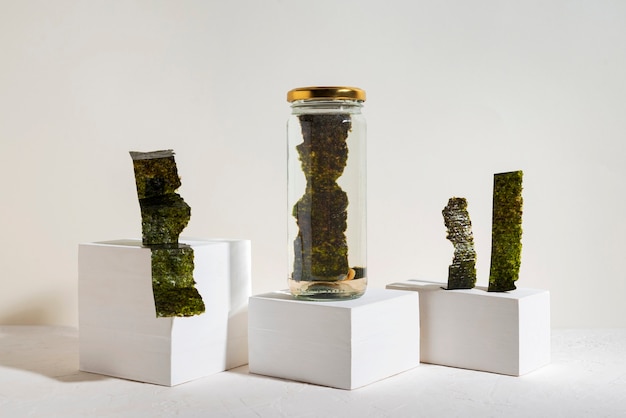
Every batch we blend carries an origin note — the coastline region, the collection method, the drying approach. If a bed doesn't need feeding, our sampling report says so, even though that means no sale that season. We'd rather keep that trust than push a product a bed doesn't need.
Community and Collaboration
Many of the growers we work with compare notes with neighbours managing similar plots. We welcome that. Questions during a season, shared observations across nearby beds, and follow-up conversations are part of how we refine our own understanding as much as theirs.
Long-Term Thinking
A single strong harvest means little if the following season shows the same problems. We aim for feeding routines that hold up across years, not just one good result to point to. That's part of why we keep dated records — so a grower can look back and see a pattern, not a guess.
What This Means for You
Working with us means a plan you can actually follow, dosing figures that match your specific crops, and a straight answer when a feed isn't the right fit. We're not aiming for the fastest possible sale — we're aiming for a garden that keeps producing, season after season.
We'd be glad to talk through your plot and see where a measured approach might help.
Start a Conversation